

There is a very specific kind of heartbreak I see all the time in real estate. It’s not the “we lost the offer” heartbreak. It’s the “I already named the dog that doesn’t exist yet” heartbreak. The one where you are three seconds away from planning your entire future in a house you have known for twelve minutes.

I get it. I love a good home crush. I also care too much to let you buy a house that is going to ruin your peace, your finances, or your next ten years.
So here’s my honest take, from the trenches, on when to walk away. These are the moments I look at buyers and say, kindly but firmly, “Nope. This is not the one.” And yes, I will bitch and moan about it. That is part of the service.
1. The Location Is Loud, Dangerous, Or A Resale Trap
If I have one hill I will die on, it is this: a cute house does not cancel out a bad location. My most consistent hard no is a busy road. I’m talking two solid yellow lines, high-speed cut-through traffic, and that constant feeling like your front yard is basically a bike lane.
And I do not mean “a street that gets a little busy at 5 p.m.” I mean the kind of road where backing out of the driveway during rush hour becomes a daily adrenaline sport.
Why I hate it so much:
- Safety. Especially if you have dogs or kids, or you might. Turning your back for two seconds should not feel like a liability event.
- Resale. In a hot market, you might still get multiple offers. In a down market, busy-road houses are often the first to sit. I want you to have every possible advantage when it is time to sell.
- The lifestyle reality. Noise and stress add up. People underestimate how much they will feel it when it is not “a showing” and it is “your Tuesday.”
Same goes for being too close to a freeway. It is not just the noise. It is air quality, it is stress, it is resale. Now, do I ever make exceptions? Rarely. Like maybe two percent of the time. And when I do, I complain the whole way there.
I have clients right now buying on a busy road and I threw a fit about it. Then we walked into the house and I had to admit the annoying truth: it was awesome, the flow worked for them, and the yard was absolutely bananas in the best way. It was one of those moments where I had to say, “Fine. I love it for you. Let’s make an offer.”That is the key. The exception has to be truly worth it. Not “the pictures were cute.” Worth it.
2. The Layout Does Not Support Real Life
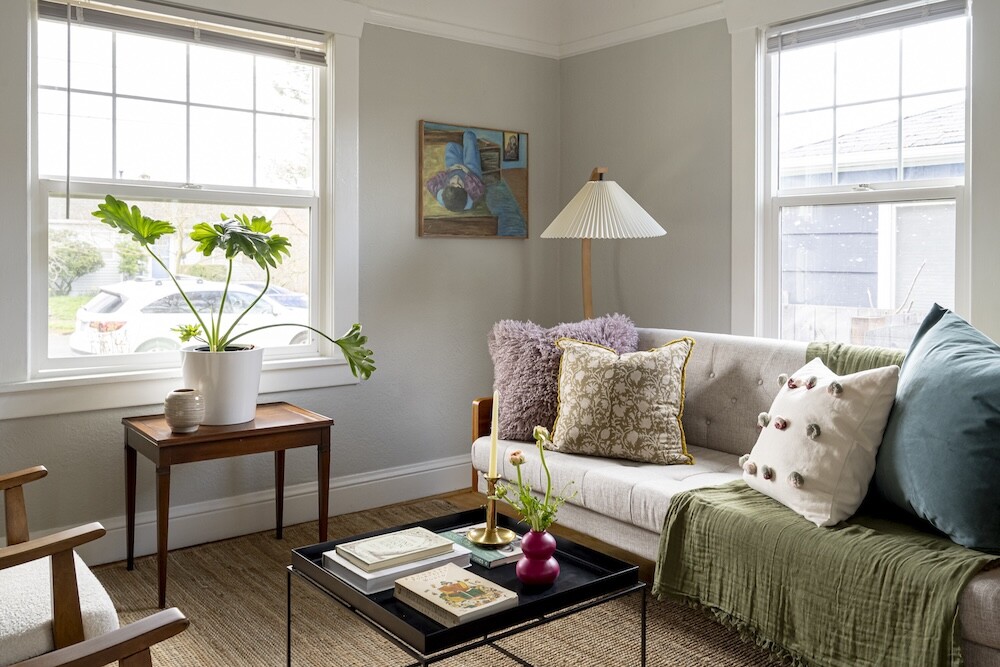
I don’t care how pretty it is staged. I don’t care how good the wallpaper is. I don’t care if the listing description says “designer.” If the layout makes your daily life harder, it is not the one. This is the part where I start asking annoying questions like:
Where is the couch going to go? Where does the TV live? Are we really putting a dining table here or is that fantasy? Why are there eight doors in the kitchen? How are you going to move through this space on a normal day? Because staging is not real life. Real life is backpacks, laundry, pets, tired Tuesdays, and hosting friends without performing gymnastics around your own furniture. Don’t get me started about lack of coat closets in houses!
This gets especially real for buyers who want kids in the next five years. I say this with love: you do not want to be running up and down stairs at 2 a.m. with a crying toddler. If the bedrooms are split across levels in a way that makes no sense for how you will live later, that is not “quirky.” That is future-you calling me stressed out.
And sometimes the needs are delightfully specific, which I genuinely love. I have clients right now who are obsessed with aquariums, and I mean obsessed. They need space sturdy enough for a future hundred-gallon tank, not near a window because algae, and they want a yard big enough for a full koi pond. It is incredible. I love them. And it is exactly why layout matters.The point is not to shop for a generic dream house. The point is to shop for your actual life.
3. The “Fixer” Is Actually A Money Pit In Disguise
Let’s talk about the difference between “this house needs work” and “this house is going to drain you emotionally, financially, spiritually, or all three.” Some people say they want a fixer and what they really mean is they want to paint. Which is fine. But that is not a fixer.
A fixer is not cosmetic. A fixer is systems. It is foundation. It is siding. It is water management. It is roofs, gutters, downspouts, and all the unsexy stuff that keeps a house from trying to kill you slowly.
There are absolutely people who love a major project. I am one of them. I bought a house in rough shape and I knew what I was signing up for. But most buyers are not looking to re-side a house, replace a foundation, and spend years digging out of deferred maintenance.
I have walked into houses and thought, “We need to get the f**k out of here.” Siding falling off. Bad foundation signs. Serious deferred maintenance. The kind where you can feel the exhaustion baked into the walls.
I lived through my own version of this. I dealt with a house that had major deferred maintenance, and it is not just money. It is time, stress, decisions, managing contractors, and constantly feeling behind.
Here is the truth. Most of my clients are extremely busy. High pressure jobs. Full lives. They want to come home to an oasis. They want to cook a beautiful meal, stare at a gorgeous garden, and undo the stress of their day. They are not trying to spend the next three years in renovation purgatory.
That does not mean you have to buy “perfect.” A house with good bones can be ugly. That is fine. “Good bones” to me means constructed and maintained well, but not Pinterest-ready. Cosmetic ugly is fixable. Structural ugly is a different conversation.
The Sneaky Red Flags That Get Expensive Fast
Some issues scream at you during a showing. Others look small on paper and then become a whole situation during inspections. Here are the big ones I watch for:
- Bad Flips And Pretty Disguises
A bad flip is when a house is pretending to be “good bones” and “pretty” but it is just makeup on problems. New finishes do not automatically mean quality. An inspector cannot find everything, but they can find signs, and Maria and I are your first line of defense before you ever spend the money to inspect.
Because inspections can easily be $1,500 once you add all the tests that matter. I do not want you spending that over and over because we kept chasing houses that were obviously going to inspect poorly.
- Handyman Special Work
Owner-done work is not automatically bad. But poor work is expensive. Sometimes you can spot it immediately. Sometimes you only find it during inspection. Either way, it can turn into a domino effect, especially when you start opening walls and discovering surprises.
Our job is to steer you away from houses that are going to become a project you did not consent to.
The Moment I Know Someone Is Trying To Force It
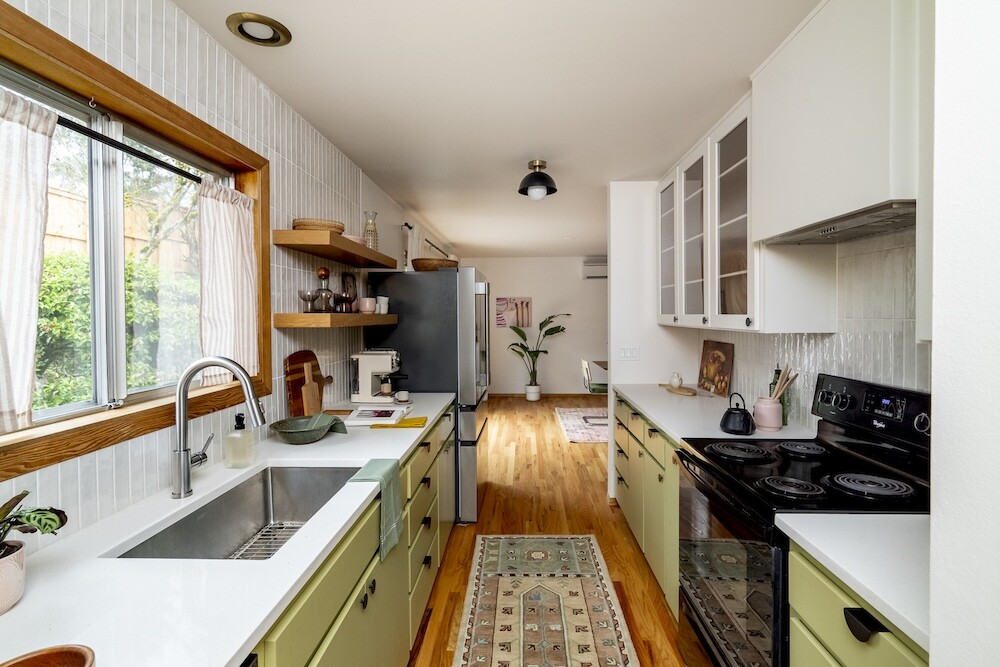
This happens constantly: a buyer sees the cute listing photos, falls in love, and then we look at the map and I say something like, “You know this is behind a car dealership, right?” And they still want to see it. So we go. Because sometimes you have to feel it.
Then we step outside. You hear the noise. You see the traffic. You realize the cute kitchen does not cancel out the reality of the location.
That is when I do what I always do. I bring it back to practical life and the long game. You might be able to tolerate this now. But what about if you need to sell in a down market? What about if your life changes? What about if you want to turn this into a rental later?I am not here to “close” you into a house. I am here to help you make a decision you will still feel good about 10 years from now.
“Am I Being Too Picky Or Am I Being Smart?”
This is the part where I want you to hear me clearly. You are allowed to be picky. A house is the biggest purchase most people will ever make. You should not be shamed into settling. But there is also a difference between wise standards and perfection-chasing.
Here is the filter I use with clients:
Are You Getting A Big “Yes” Feeling Or Just Trying To Talk Yourself Into It?
I had a client recently who fell hard for a stunning Victorian. It needed a lot of foundation work. That is part of being a Victorian person. Those houses wobble. It is what it is. We also looked at a super solid house in a great neighborhood with a decent layout. On paper, it was “the smart choice.” And she said something I will never forget: “I don’t know why, but I don’t have the same feeling.”
That matters. We are always looking for that big reaction. The “this is home” feeling. Not because we are romantic, but because it often signals alignment you cannot logic your way into. And then, once we find that “yes,” we fight like hell for it.
I also had a buyer who was super picky in a way that felt impossible. He wanted a unicorn. I did not think the unicorn existed. Then we found it. He was in love with the light, the flow, the way he could cook and entertain, the space for his kids. And then we got under contract and he panicked, like full spiral. Price is high. Taxes are high. What am I doing?
I reminded him: remember how you felt in that house. Is that worth the money you can afford? He calmed down. Because he knew the answer.
So if you are trying to decide whether to walk away, ask yourself: Do I feel a real yes? Or am I trying to convince myself because I am tired?

The Bottom Line
Walking away is not failure. Walking away is strategy. The right house should not require you to ignore your body, your budget, your future, and your sanity just to make it work.
And if you are stuck between “too picky” and “too stressed,” tell your realtor everything. The whole story. Your goals, your timeline, what you can handle, what you cannot. That is how we stay inside the guardrails.
Over here: you can do better. Over here: we might need to adjust expectations.My job is to keep you in the middle and get you into something you can love without regretting. If you want help sorting through what is a real red flag versus what is just normal house stuff, reach out. Maria and I will tell you the truth, even when the photos are cute.