
I did not get into real estate because I had some lifelong passion for granite countertops.
I was in my 30s, growing weed in a basement, looking around like, Well, this is shitty. What the hell am I doing with my life?
A friend told me I’d be good at real estate. My immediate response was basically, “Don’t tell me what to do.” Obviously, I eventually did it anyway. What I didn’t realize at the time was how perfectly this weird career detour would collide with something I had understood in my body since I was a kid: housing is safety.
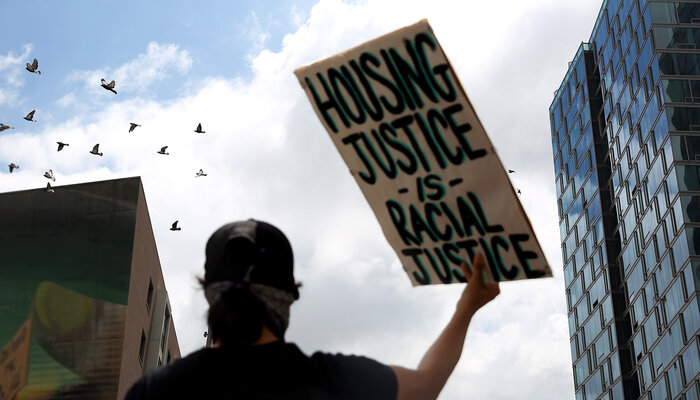
And that is a huge part of why housing justice matters so much to me now.
I recently talked about all of this with Sam on the Roots of Change podcast, where we got into housing privilege, generational wealth, community, and what the hell any of us are supposed to do while living inside systems we know are deeply broken.
At one point I said, “We’re all in the soup.” And honestly, that may be the most accurate explanation of modern life I have come up with.
Housing Justice and The Soup We’re All In
Here’s the giant mindfuck of working in housing. I believe housing is a human right. I also work in an industry where housing is an investment. Cool. Great. No conflict there whatsoever. And if you keep pulling that thread, it gets even messier.
I am a white woman selling land in a country built on stolen Indigenous land. Housing and lending in this country have been shaped by racism, redlining, discriminatory lending, displacement, and a truly staggering amount of bullshit designed to keep wealth concentrated in the same hands.
There was a point in my career where I had a genuine crisis about that. I remember thinking, What the fuck am I doing? I’m selling stolen land. Do I quit? Is participating in the system inherently wrong?
Eventually I landed somewhere deeply imperfect but more useful than having an existential crisis forever: “We’re all in the soup.”
I cannot magically remove myself from the system. None of us can right now. So my job is to do what I can from inside it.
I can help someone become the first person in their family to buy a house. Find down-payment grants for Indigenous buyers. Help friends combine resources and buy together. Get queer families into homes where they feel safe. Support builders who are actually creating community-centered housing. Connect people with organizations doing work I cannot personally do.
That is also why I’ve written before about why I talk about politics in real estate. Housing justice is not some separate little social issue I tack onto my business when I’m feeling charitable. It is baked into the work.
I cannot fix housing. I can absolutely decide how I participate in it. I’ve said this before and I’ll say it again: I do not want to be for everybody.
I would rather work my ass off for three little baby buyers barely squeezing into their first house who are kind and care about their community than take money from some asshole whose values make my skin crawl.
And for the record, this is not me saying values-aligned clients only exist at the scrappy end of the budget. I have fabulous higher-end buyers too. People with money who are thoughtful, generous, community-minded, and an absolute joy to work with. Turns out you can have a big budget and still give a shit about other humans. Revolutionary, I know.
I’m lucky that I’m at a point in my career where I can make that choice. So I do.
Community is not a vibe
This is probably my favorite place the podcast conversation went. Because eventually, when you trace all of this far enough, you end up at community.
Community is having a little renaissance right now, which I love, but I also think we occasionally confuse being around people with actually being in community. Community requires something from you.
My best friend says, “You pick your friends up from the airport. Suck it up. Get up early.” And she is right.
Community can be inconvenient. It can mean spending your Saturday weeding somebody else’s yard because next weekend everybody is coming to yours. It’s bringing food, pooling money, sharing childcare, opening the spare room, or just showing the fuck up when staying home would be infinitely easier.
It is part of why I get so excited about friends buying together, multigenerational housing, cottage clusters, and housing arrangements that do not look like the standard nuclear-family fantasy we have been sold.
I talked on the podcast about helping a trans couple who were expecting their first baby buy into a small cottage cluster built around shared community space. I ended up selling multiple homes there to people who genuinely wanted to know and support their neighbors.
That shit excites me. Because a house can give you individual stability. A community can help keep you stable.
Those are not the same thing.
And protecting that stability matters too. It is why I continue to support organizations like Taking Ownership, which is doing the very real work of helping Black Portland homeowners stay in their homes and preserve the equity they have already built.
Housing justice is not just about getting people through the front door. It is about helping them stay there too.
Find Your Weirdos
Now, community is not equally easy for everyone.
Trauma can make trusting people hard. Depending on anyone can feel terrifying if your experience has taught you that people are unreliable or unsafe. Disability can make gathering physically difficult. Some people live in places where being fully themselves is not safe.
I am lucky that community-building comes pretty naturally to me. That is its own privilege.
But I also think the internet, for all the absolute garbage it has given us, has done one truly incredible thing. You can find your weirdos.
Maybe your people are not at the neighborhood barbecue. Maybe they are queer horror-movie nerds who knit. Or they are disabled activists three states away. Maybe they are six people in a group chat who understand the specific thing nobody in your immediate world understands.
Find them. Then (and this is crucial) you have to water that shit.
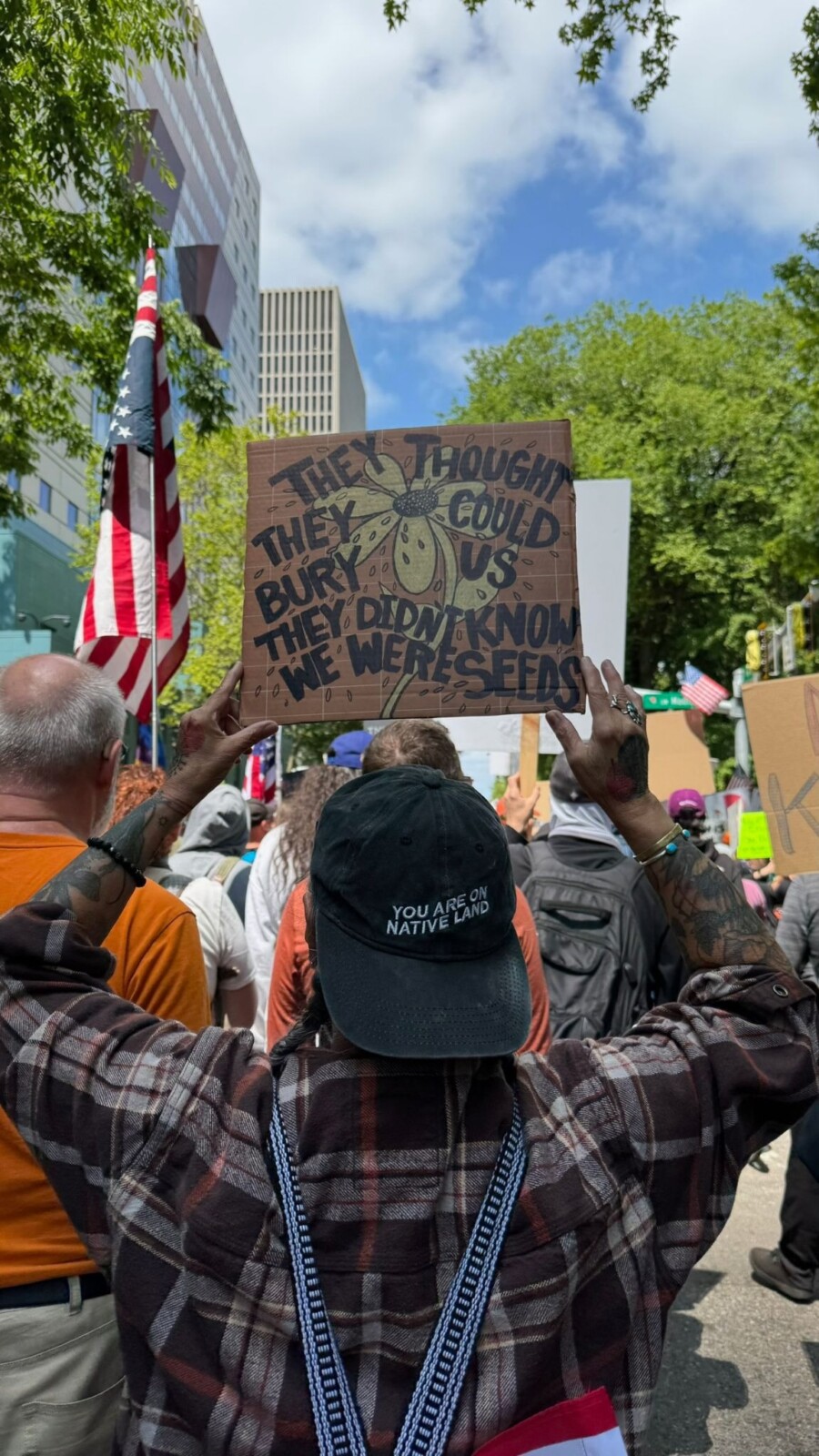
Sam used the metaphor of planting seeds during our conversation, and I loved it because this is the part we forget. You cannot plant one friendship seed, stare angrily at the dirt for three days, and announce that community does not work. You have to participate.
This Is The Part That Gives Me Hope
The world we live in would very much like you to believe every problem is yours individually.
Can’t afford housing? Your problem.
Can’t afford childcare? Your problem.
Medical debt? Your problem.
Burned out? Fix your morning routine.
Lonely? Download another app.
Figure it out yourself. I don’t buy it.
As I said on the podcast, “This world and capitalism is just forcing individualism on us, which is killing us and the planet.” So my antidote is community. Build it. Support it. Be useful inside it. Let other people be useful to you.
Housing, healthcare, money, safety, belonging. None of these things actually exist in little individual boxes, no matter how hard we pretend they do.
We’re all in the soup. Might as well make the fucking soup more nutritious.
If you want to hear the whole conversation, watch my episode of Roots of Change on YouTube, learn more at Knurdology, or follow Roots of Change on Instagram.